How to Break Down Stigma of Mental Health Peer Review
Introduction
The stigmatization of people with mental disease is a global and multidimensional miracle (Angermeyer and Dietrich, 2006; Thornicroft et al., 2009). Crocker et al. (1998) suggested that stigma occurs when a person possesses or is believed to possess "some aspect or characteristic that conveys a social identity that is devalued in a detail context" (p. 505). Corrigan and Shapiro (2010) defined stigma as a phenomenon comprising 3 constructs – (a) stereotypes (b) prejudices, and (c) discrimination. Stereotypes are oversimplified generalizations about people belonging to a specific group and are ofttimes culturally determined. These include preconceptions about the traits or abilities of people belonging to a particular grouping. Thus stereotypes are cerebral perceptions of how persons belonging to 1 group are "different" from persons belonging to another group. Stereotypes atomic number 82 people to come across groups as overly homogenous and therefore, they fail to meet the private's characteristics. It besides leads the person to focus on that data, which is in line with the stereotype and ignore the ones that do not conform with it. Prejudice is a negative attitude based on stereotypes toward members of a specific group. Allport (1954, p. 7) divers prejudice as "aversive or hostile attitude toward a person who belongs to a group, simply because he belongs to that grouping, and is therefore presumed to take the objectionable qualities ascribed to that group." Stereotypes and prejudices lead to bigotry which is an unjustified, negative behavior toward members of a group. In the context of mental illnesses, stereotypes such as the belief that persons with mental illness are dangerous can lead to fearfulness of people with mental illness (prejudice) which in turn can lead to them existence turned down for jobs thereby limiting their access to employment (discrimination). Stigma thus has a tremendous impact on the well-being of people with mental illness and oftentimes results in poor access to healthcare (Mai et al., 2011; Gissler et al., 2013), exclusion from college education (Lee et al., 2009), and unemployment (Sharac et al., 2010). Furthermore, the internalization of negative views resulting in cocky-stigma has been linked to low cocky-esteem and cocky–respect, every bit well equally poorer quality of life, for people with mental illnesses (Świtaj et al., 2009; Ow and Lee, 2015; Corrigan et al., 2016; Picco et al., 2016).
Enquiry in Singapore has identified significant public stigma toward those with mental illness (Yuan et al., 2016; Pang et al., 2017; Subramaniam et al., 2017). A study on Singaporean youth identified several misconceptions toward mental illnesses with a significant proportion stating that they would not want others to know virtually their mental illness should they have one, and felt that they would be stigmatized past their peers if they knew near their illness (Pang et al., 2017). Collectivist values, besides as the perceived "loss of face" if a person/family member is diagnosed with mental disease and the resultant loss of social capital letter, are concepts that are unique to Asian cultures (Yang and Kleinman, 2008; Papadopoulos et al., 2013). Entwined with these cultural factors is the importance given to the concept of meritocracy in Singapore. Young people may not want to be seen as belonging to the "Other" negatively stereotyped grouping and thus may avoid getting a diagnosis and accessing treatment. Those pursuing their education may as well be fearful of the loss of social capital if their diagnosis is disclosed equally discrimination may affect their future bookish or employment prospects.
This is reflected in the fact that although mental disorders are prevalent in Singapore'south population (xiii.9%) especially among those aged xviii–34 years (21.6%) (Subramaniam et al., 2020), and youth in Singapore identified mental health problems such every bit depression and anxiety as i of the acme bug they faced (National Youth Council, 2019), in that location was a large treatment gap beyond all historic period groups (Subramaniam et al., 2019). Reasons for not seeking help included "not knowing where to seek treatment" as well as "concerns well-nigh what others would think" if they plant out that the person was seeking treatment. Thus, suggesting that the handling gap is influenced by both a lack of mental health literacy and stigma toward mental illness.
Several anti-stigma interventions have been developed to mitigate the negative touch on of stigma across various populations such as the general public, police officers, healthcare professionals, and students (Gronholm et al., 2017). This current study aimed to design and evaluate the effectiveness of an anti-stigma intervention focusing on low among university students in Singapore. Depression was called equally it had the highest prevalence amid the mental disorders examined in Singapore, and despite being well-recognised, information technology is associated with a meaning treatment gap (Chong et al., 2016; Subramaniam et al., 2019, 2020). University students were chosen as the target group for the intervention after because several factors. As stated before, mental illnesses, including depression, are college in this population. Experiencing a mental illness in college has been associated with academic detachment (Eisenberg et al., 2009) equally well equally suboptimal economic and social outcomes in after life (Goodman et al., 2011; Kawakami et al., 2012). Further, across encouraging the young person with a mental illness to seek help, interventions in this grouping have the potential to enlist peers who can encourage a distressed friend to seek help. Additionally, academy or college students may go futurity leaders of communities with the influence and ability to reduce stigma.
The effectiveness of the intervention was evaluated in terms of improving the noesis of depression, and reducing stigma and social distance. We hypothesized that the intervention would result in improved cognition, and reduce stigma and social altitude toward low and that these furnishings would persist at 3-month follow-up.
Materials and Methods
Sample
Students from a local university were invited to participate in the study. An electronic mail was sent out past the university staff, asking students to point their willingness for participation in the written report on a designated webpage through an Net link. Additionally, the study was as well advertised by putting up a post on the academy's Facebook groups with the Cyberspace link, and by putting upwardly posters with a QR lawmaking leading to the same designated webpage for those interested in participating in the report. As per the requirements of our ethics committee in all the outreach materials, we described the intervention as: "a study carried out to evaluate the effectiveness of an anti-stigma talk that focuses on mental affliction, amidst university students in Singapore." To continue the sessions interactive and depending on the size of the bachelor room, participation was restricted to a maximum of fifty–lxx students. Those who indicated their willingness were sent consent forms by east-mail, and for students who were younger than 21 years, parental consent was likewise sought. On the day of the session, consent for each participant was taken by a inquiry staff, and they were asked to clarify their doubts related to the study or study procedures. The study was approved by the institutional ethics committee (National Healthcare Group, Domain Specific Review Board).
Intervention
Educational activity, contact, and protest have been suggested equally the core elements for reducing stigma according to the stigma reduction theory by Corrigan and Penn (1999). Education provides factual information near mental illnesses, replacing myths and stereotypes that individuals may harbor. Contact includes interactions with people who take a mental illness, which may challenge prejudices. Protest, where one identifies, highlights, and speaks out confronting prejudices and discriminatory acts toward those with mental disease, can also potentially reduce stigma (Corrigan et al., 2001). A systematic review by Yamaguchi et al. (2013) indicated that live or video-based contact with people with mental health problems were the most constructive interventions in improving attitudes and reducing the desire for social distance. However, results from another review suggested that providing treatment information might enhance students' attitudes toward the use of services (Gulliver et al., 2012). A systematic review by Thornicroft et al. (2016) plant that interventions primarily involving either mental health education or education combined with contact with someone who has a mental health problem resulted in an improvement in knowledge and attitudes over the short-term, though this effect diminished with fourth dimension.
The intervention for the current study was designed based on the stigma reduction theory and findings that interventions involving pedagogy combined with direct contact are constructive in reducing stigma. The 1-off intervention comprised a single session. The educational component comprised a lecture on the prevalence, symptoms, and biopsychosocial causes of low. Factual data on treatment options as well every bit avenues for help-seeking was besides provided. The contact component of the intervention comprised a sharing session past a person with lived feel of mental illness about the clinical aspects of her low, her challenges in accepting her illness and in seeking help, and concluded with a sharing of her recovery journey. The person had worked as a youth ambassador for a mental health service provider in Singapore and was trained to educate people about mental health issues (Community Health Cess Squad, 2014). This was followed by a Question and Answer (Q&A) session with a consultant psychiatrist, a mental health research expert and the person with lived experience where students could clarify their doubts or inquire for more than detailed information related to the presentations.
In society to meet the target sample size, ix sessions were held over a period of vi months (Oct 2018 to April 2019). All the sessions were held in the evenings after classes to facilitate participation. The interval between sessions was normally ane calendar week but longer breaks were scheduled during the exam catamenia and term break. Consistency was maintained across all the sessions past using the same textile, which was delivered as a powerpoint presentation usually past the same person (all except three sessions), sharing by the aforementioned person with lived experience of mental illness, and the same members of the research grouping participating in the (Q&A) sessions. Each session lasted for about an hr.
Questionnaires
Information was collected through a series of paper-and-pen questionnaires. These questionnaires were administered earlier and after the intervention. The students were asked to provide socio-demographic information, and this was followed past a brusk vignette that students were instructed to read earlier answering the other questionnaires. The vignette described a person (named Adam) with depression, and it has been used previously in a population-wide report in Singapore (Chong et al., 2016). The questionnaires used were equally follows:
(i) Depression literacy questionnaire (Griffiths et al., 2004): This mensurate consists of 22 items, which includes statements assessing the respondents' knowledge about depression. For each statement, respondents will select what they believe to be the correct response from three possible choices (true, simulated, or I practise non know). Respondents score 1 point for each correct answer, and total scores ranged from 0 to 22 with college scores indicating higher literacy for depression. For the remainder of this article, nosotros have referred to low literacy scores as knowledge scores.
(ii) The Personal Stigma subscale of the Depression Stigma Scale (DSS) (Griffiths et al., 2004): This scale measures the respondents' attitudes toward low by asking them to indicate how strongly they personally agree with nine statements about depression. For the purposes of this report, only the eight-item DSS-personal subscale was used ("I would not vote for a politician if I knew they had a mental illness" detail was not included). Responses to each detail are measured on a five-point scale (ranging from 1 "strongly disagree" to 5 "strongly agree"). This questionnaire has been validated in the local population and shown to comprise two singled-out dimensions comprising "weak-non-sick" and "unsafe/unpredictable" (Subramaniam et al., 2017).
(three) The Social Distance scale (Link et al., 1999): This scale measures the self-reported willingness to make social contact with the person described in the vignette. Responses to each item were measured on a 4-point calibration (ranging from one "definitely willing" to 4 "definitely unwilling." The scale score is calculated by summing item scores, where higher scores indicate a greater desire for social distance.
Sociodemographic data almost the respondent, namely, age, sexual practice, nationality, ethnicity, and faith, was nerveless. Data related to participants' university experiences were also nerveless such as year and discipline of study. As some students may be/accept been involved in volunteer groups or campus peer-helping activities, a question on such involvements was likewise included. They were also asked if they had any close friends/family unit members who had been diagnosed with a mental illness.
Students were asked to provide an e-mail address at which they could be contacted for the 3-calendar month follow-up. The set of questions that were used post-intervention were sent to the participants at the 3-month follow-upwardly. A mass reminder electronic mail was sent a calendar week post-obit the iii-month follow-up email.
Sample Size Estimation
The estimation of sample size in this written report was performed using the two means formula for paired data with power and alpha of 80 and five%, respectively. The sample size was calculated with reference to another written report (Ahuja et al., 2017), where 50 college students were recruited for a one-time educational and contact-based intervention, and changes in their attitudes toward mental illness were tracked by comparison of their CAMI scores pre-and post-intervention. Based on the means and standard deviations of the four CAMI subscales: authoritarianism, social restrictiveness, benignancy, and community mental health ideology at the pre- and postal service-intervention of the aforementioned study, we arrived at an estimated sample required size for our study. We plant that we would demand at least 233 subjects to exist able to reject the nil hypothesis that the means of the CAMI subscales are equal between the pre- and postal service-intervention assessments. Subsequently considering approximately 40% loss to follow-upwards (40/100 × 233 = 93), a final sample size of 326 (93 + 233 = 326) was adamant to exist sufficient for the study.
Statistical Analysis
All analyses were conducted with SAS software version 9.4. Means and standard deviations were calculated for continuous variables, while frequencies and percentages were calculated for categorical variables. Linear mixed models were used to assess the effects of the intervention and to account for missing data, individual heterogeneity and repeated measurements on the same individuals over time. The "time" variable was included in the linear mixed models as both random and fixed furnishings to accommodate for the overall and the individual variations in the stigma scores throughout time. Linear and quadratic effects were tested as both random and stock-still parameters, along with interaction terms with other covariates. The models were first done unconditionally (i.due east., without covariates) to compare pre-intervention, postal service-intervention, and 3-month follow-upward scores on the personal stigma (weak-not-sick and unsafe/undesirable), and social distance scale. This was followed by using baseline socio-demographic factors such every bit age, gender, ethnicity, year of written report, whether they have close friends or family member who had a mental disease and having experience in the past in the mental health field (e.1000., involvement in volunteer groups or campus peer-helping activities) as time-invarying covariates as well as changes in knowledge of depression over fourth dimension every bit a time-varying covariate. The effect of any potential factors that might influence the rate of change in the scores over fourth dimension was explored using interaction terms between time and each covariate. Means and standard deviations for personal stigma and social altitude scores at different time assessments were besides calculated. Effect sizes were calculated comparison pre-intervention scores to the post-intervention and 3-month follow-upwards scores using Cohen'south d = (Mean time 2−Mean time i)/Pooled SD. It has been suggested that a value of d of 0.2–0.five represents a small-scale effect, a value of 0.5–0.8 represents a medium/moderate effect, and a value of d of 0.8 or higher represents a large effect. Statistical significance for all analyses was set at the conventional alpha level of p < 0.05, using ii-tailed tests.
Results
The characteristics of the sample are presented in Table 1. The pre-intervention sample consisted of 390 students from a university in Singapore aged 18–31 years. The majority were females (lx.iii%), of Chinese ethnicity (82.8%), and 22.2% had past experience in the mental health field. 326 students completed the 3-month follow up assessments (retentivity rate = 83.vi%).

Table ane. Baseline characteristics of the sample (due north = 390).
Depression Literacy
The linear (β = 9.five, p-value < 0.001) and quadratic (β = −ii.1, p-value < 0.001) furnishings were significant, indicating that the noesis scores increased mail service-intervention and slightly reduced over the three-month follow-upward period (Effigy ane). A meaning departure was observed in knowledge scores when comparing the pre-intervention to the post-intervention scores (p-value < 0.001) and the iii-calendar month follow-up scores (p-value < 0.001). The effect size was reduced from d = 1.09 at post-intervention to d = 0.75 at the 3-month follow-upwards compared to post-intervention (Tabular array two). The meaning linear and quadratic effects remained the same later on adjusting for all covariates (Table 3). When interaction terms were added in the model, significant interactions were plant between time and those who had family or friends with mental illness. Those who had family unit or friends with mental illness tended to have a lesser increase in the knowledge scores at the mail-intervention (β = −3.3, p-value = 0.026) and a lesser subtract in the knowledge scores (β = 0.viii, p-value = 0.025) at the iii-month follow-upward.

Figure 1. Mean depression literacy scores over fourth dimension. *p < 0.05; **p < 0.01.
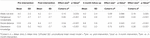
Tabular array 2. Personal stigma and social distance scores at pre-intervention, mail service-intervention, and iii-month follow-upwardly.

Table 3. Effects of intervention on personal stigma, and social distance.
Weak-Not-Sick Scores Over Time
In that location was a pregnant downwardly linear trend over time in the weak-not-ill scores (β = −0.two, p-value = 0.003), indicating that the scores decreased mail service-intervention and remained low during the 3-month follow-up period (Figure two). A significant departure was observed in weak-not-ill scores when comparing the pre-intervention scores to the post-intervention (p-value = 0.033) and the iii-month follow-upwardly scores (p-value = 0.003). The upshot size was slightly reduced from d = 0.10 at mail service-intervention to d = 0.09 and after 3 months. After the add-on of covariates in the linear mixed model, significant linear and quadratic effects were observed in the data where the scores significantly increased mail-intervention (β = 1.1, p-value = 0.008) and decreased at 3-month follow-upward (β = −0.iii, p-value = 0.005) (Table 3). When interaction terms between time and covariates were added, no interaction terms were significant.

Figure ii. Hateful weak-not-sick scores beyond fourth dimension. *p < 0.05; **p < 0.01.
Dangerous/Unpredictable Scores Over Time
The linear (β = −4.vi, p-value < 0.001) and quadratic (β = 1.0, p-value < 0.001) effects were significant, indicating that the dangerous/unpredictable scores decreased post-intervention and increased over the 3-calendar month follow-up menses (Figure three). The scores significantly decreased at post-intervention (p-value < 0.001) and the 3-calendar month follow-upward (p-value < 0.001) when compared to the pre-intervention scores, and significantly increased when the iii-calendar month scores were compared to the postal service-intervention scores (p-value = 0.009). The effect size was moderate (d = 0.60) at the postal service-intervention and small at the 3-calendar month follow-up (d = 0.17) (Table two). The significant linear and quadratic effects remained the same after adjusting for all covariates (Table iii). When interaction terms were added in the model, significant interactions were constitute between time and knowledge scores; increased cognition scores tended to further decrease the unsafe/unpredictable scores (β = −0.1, p-value = 0.006) at mail service-intervention. Even so, no pregnant interactions were found at iii-calendar month follow-up.

Figure 3. Hateful dangerous/predictable scores beyond time. *p < 0.05; **p < 0.01, ***p < 0.001.
Social Distance
The linear (β = −4.2, p-value < 0.001) and quadratic (β = 0.89, p-value < 0.001) effects were meaning, indicating that the scores decreased mail-intervention and increased at the 3-calendar month follow-upwardly (Figure 4). The scores significantly decreased at post-intervention compared to pre-intervention and significantly increased at the 3-month follow-up when compared to the post-intervention scores (p-value = 0. 038). The effect size was medium (d = 0.54) at post-intervention and small-scale at iii-month follow-up (d = 0.12). The significant linear and quadratic effects remained afterwards adjusting for all covariates. A pregnant interaction was observed betwixt fourth dimension and those who had family or friends with mental illness (Table 3). Those who had family or friends with mental illness (β = 0.vi, p-value = 0.005) tended to accept a lesser decrease in social distance scores at post-intervention than their counterparts.

Effigy iv. Mean social distance scores beyond time.
Discussion
This research focusing on academy students examined the effects of an educational and contact-based intervention on personal stigma and social distancing toward depression immediately following the intervention and 3 months after the intervention. The findings supported our hypotheses. There was a significant reduction in personal stigma and social distancing from pre- to post-intervention, as well as from pre-intervention to the 3-calendar month follow-up. Outcome sizes were medium for the dangerous/unpredictable dimension as well every bit social distance and considered trivial for the weak-not-sick dimension. Our findings are unlike from that of Kosyluk et al. (2016), who found small effect sizes of stigma modify at post-intervention amid university students. Withal, the authors compared educational interventions with social contact, and the combined approach adopted by this written report could have resulted in a ameliorate effect. Few studies have examined and reported stigma change in the follow-up period. Campbell et al. (2011) examined the affect of a curt psychosocial intervention that involved mental health education and contact with an ex-service user to reduce discrimination toward psychosis in 43 pupils and found that the gains in the discrimination reduction were not sustained at 10-week follow-up. A review by Mehta et al. (2015) concluded that the effectiveness of anti-stigma interventions later 4 weeks was modest in terms of increasing knowledge and reducing stigmatizing attitudes, and emphasized the need for robust studies that examine long-term outcomes as well as to explore the use of booster interventions for sustainability.
The mean scores in the sample for the weak-not-sick and dangerous/unpredictable dimensions at baseline were 4.five and 5.7, respectively. These significantly contrasted with the mean scores observed in a nationwide study on mental health literacy, where the adult sample endorsed more than stigmatizing attitudes toward those with low in the two domains of DSS with mean scores of 10.6 and ten.8, respectively (Subramaniam et al., 2017). The lower pre-intervention scores in the student sample in the domains of the DSS, indicating lower stigmatizing attitudes are encouraging, and they may also explain the small-medium effect size over time. Interestingly, and somewhat surprisingly, social distance scores were not different in the population and student samples, with both samples having a hateful score of 10.ix (pre-intervention scores for the university group). Social distancing may be influenced by many factors (Lauber et al., 2004), including perceptions of dangerousness and causal beliefs. Although the students had lower scores on the dangerous/undesirable domain, this did not reduce social distancing, suggesting that social distancing may exist more ingrained, and in that location could be cultural aspects associated with it. A study by Cleveland et al. (2013) found that while psychosocial causal attributions were associated with lower social distancing, the attribution to personal factors such equally lack of subject, weakness of grapheme, and wrong lifestyle were associated with college social distancing. Studies have institute that Asians tend to endorse personal factors as a cause for mental illness (Nakane et al., 2005; Pang et al., 2018). A previous population-wide written report in Singapore found that "Personality" (being a nervous person and having a weak graphic symbol) was perceived to be a significant causal attribute, with 89.ane% of the population attributing information technology as a crusade of depression (Pang et al., 2018). While this study did non examine the part of causal attributes in social distancing, these behavior may play a part. On the other hand, Norman et al. (2008) suggested that social distancing is associated with perceived normative expectations about the behavior. Thus, if it was perceived that the disease would issue in embarrassing behavior that would not be favorably looked upon by those considered of import to the respondent, or that they would not appoint with this person, greater would be the social distancing endorsed by the respondent. The respondents may take also felt that associating with a person with mental illness may effect in "courtesy stigma," which is defined as the distancing and rejection faced by individuals who are associated with members of a socially devalued category (Goffman, 1963). Young people may be even more than sensitive to beingness "othered" by their peers and thus may not be willing to associate with a person with mental illness. However, it was encouraging that the intervention resulted in a reduction in social distancing even 3 months post-intervention though the effect size was small.
There was a significant increment with a large consequence size in the depression cognition from pre- to post-intervention, which, however, declined after three months. The educational intervention provided factual data and may have served to challenge existing stereotypes about depression (Corrigan and Shapiro, 2010; Economou et al., 2012). Depression knowledge at baseline was associated with lower stigmatizing attitudes; there was also a significant time × cognition interaction at mail-intervention where increased cognition scores were associated with lower unsafe/unpredictable scores. Withal, nosotros were non able to observe whatever meaning interaction at the 3-month bespeak, which may take been due to the decrease in the knowledge scores from post-intervention to 3-month follow-up.
Our results also highlight the importance of contact in lowering stigma. Reinke et al. (2004) suggested that contact is often most helpful when the contact person is an individual of a similar age to the participants and but "moderately" disconfirming of stereotypes. In our report, the person with the lived experience while slightly older than the students was able to connect with the audience as she shared her experiences candidly; her narrative of struggles and successes resonated with them. Since the person had prior feel of sharing her story, she came across as someone who was confident and capable and answered the questions posed by the participants competently. Strategising the bulletin of the educational intervention is equally important. Lam et al. (2005) in their interventional study to evaluate the bear upon of causal labels on mental illnesses found that individuals who were provided a psychological crusade for the disorder rated patients equally significantly more likely to be curable and significantly less likely to harm themselves. Concerning the current report, the lecture provided information on all probable causes; nonetheless, the accent was more on assist-seeking, helping a peer in distress, various forms of treatment that are easily available in Singapore, and recovery.
While several covariates were pregnant across unlike measures of stigmatizing attitudes, the influence of two variables is noteworthy. While female person gender was a significant covariate for stigmatising attitudes, we did not find a meaning effect of being female person on the response to the intervention. Similar results were found by Andrés-Rodríguez et al. (2017) who evaluated the "What's Up" intervention in Catalan high schools, where female gender was associated with lower stigmatizing attitudes, but information technology did not influence the consequence of the intervention. Another covariate that appeared to be significantly associated with lower stigma and higher noesis scores was – having a close family or friend with a mental disease. It may be the case that having a shut human relationship with someone with a mental disease makes it easier for youths to experience empathy with them. They may, therefore, have lower levels of stigma than those who have no friends or close relatives with depression, as it has been observed that empathy is a key individual gene influencing attitude alter toward mental illnesses (Couture and Penn, 2003). Information technology is besides possible that these youths have a better understanding of mental illnesses and have a more realistic understanding of someone with mental affliction. Notwithstanding, these youths showed significantly lower improvement in social distancing and noesis in response to the intervention. Andrés-Rodríguez et al. (2017) on the other paw, did not notice whatsoever upshot of the intervention on this group, although stigma levels were lower in youths who had friends or close relatives with the problem at baseline. The contact with the person with lived experience of mental illness may have been an eye-opener for those who did not have friends or family unit members with a mental illness leading to a pregnant mental attitude shift. This would accept been much more than for someone who was already aware of the strengths and capabilities of a person with a mental illness.
A limitation of the study is that the nowadays sample may not be representative of the overall population of university students in Singapore. Since this was a research study and participation was voluntary with the sessions conducted in the evening, in that location is a possibility that those who volunteered for participation may exist more interested in learning about mental illnesses or be more empathetic toward those with mental illnesses. It is important to conduct like studies across samples that are not cocky-selected such as by incorporating the intervention equally part of a module in the curriculum then every bit to arrive at a more accurate understanding of the wider student population. While a 3-month follow-upward is medium-term and informs usa that there are positive gains from pre-intervention levels, long-term follow-up research will exist of import to examine whether the impact of anti-stigma interventions is maintained across time. The data were nerveless through cocky-report measures. It is possible that some participants provided socially desirable answers despite assurances of confidentiality. Lastly, while the intervention was successful in reducing negative attitudes and expressed social distance toward people with depression, information technology is uncertain if this change will translate into more positive behaviors.
Determination
In conclusion, this research represents an of import commencement step in the development and evaluation of a combined educational and contact-based intervention for reducing stigma toward depression. The findings advise that the intervention results in both brusque- and medium-term benefits in terms of attitude change, although the stability of these benefits in the long term and their relation to behavior change are unknown. Corrigan (2011) has suggested that mental illness stigma reduction is most probable to exist effective when information technology is targeted toward specific populations, is locally based and delivered, continuous, credible, and involves contact with people who have successfully managed their mental disease. Our intervention was planned carefully taking all these points into consideration. However, it was a ane-off interaction and not sustained over a longer menses of time. Further studies are needed to evaluate the long-term effectiveness of these interventions. The acceptability and effectiveness of web-based interventions demand to exist evaluated equally these are less resources intensive. We too demand to consider the feasibility, challenges, and enablers of implementation of such interventions into the curriculum of university students to ensure a wider and sustained outreach and stigma reduction.
Data Availability Statement
The datasets generated for this study are available on asking to the corresponding author.
Ethics Argument
The written report was reviewed and canonical past National Healthcare Group Domain Specific Review Lath, Singapore. Written informed consent to participate in this written report was provided past the participants.
Author Contributions
MS wrote the first typhoon of the manuscript. MS, EA, SC, and KW designed the study protocol. EA conducted the statistical assay. ES and SS conducted the literature review. SS, CG, WO, and GT developed the educational intervention and provided inputs into the scales included in the study. NB planned and delivered the narrative of lived feel. All authors gave their intellectual input to the manuscript and take read and approved the last draft of the manuscript.
Funding
The study was funded by Tote Board, Singapore.
Conflict of Interest
The authors declare that the research was conducted in the absenteeism of any commercial or financial relationships that could be construed equally a potential conflict of interest.
References
Ahuja, M. K., Dhillon, M., Juneja, A., and Sharma, B. (2017). Breaking barriers: an didactics and contact intervention to reduce mental illness stigma among Indian college students. Psychosoc. Interv. 26, 103–109.
Google Scholar
Allport, Thou. W. (1954). The Nature of Prejudice. New York, NY: Addison-Wesley.
Google Scholar
Andrés-Rodríguez, L., Pérez-Aranda, A., Feliu-Soler, A., Rubio-Valera, M., Aznar-Lou, I., Serrano-Blanco, A., et al. (2017). Effectiveness of the "What's Up!" Intervention to reduce stigma and psychometric properties of the Youth Plan Questionnaire (YPQ): results from a cluster non-randomized controlled trial conducted in Catalan High Schools. Front. Psychol. viii:1608. doi: 10.3389/fpsyg.2017.01608
PubMed Abstract | CrossRef Full Text | Google Scholar
Angermeyer, M. C., and Dietrich, S. (2006). Public beliefs about and attitudes towards people with mental affliction: a review of population studies. Acta Psychiatr. Scand. 113, 163–179. doi: ten.1111/j.1600-0447.2005.00699.x
PubMed Abstruse | CrossRef Total Text | Google Scholar
Campbell, M., Shryane, N., Byrne, R., and Morrison, A. P. (2011). A mental health promotion approach to reducing discrimination about psychosis in teenagers. Psychosis 3, 41–51. doi: 10.1080/17522431003735529
CrossRef Full Text | Google Scholar
Chong, Due south. A., Abdin, Eastward., Picco, L., Pang, South., Jeyagurunathan, A., Vaingankar, J. A., et al. (2016). Recognition of mental disorders among a multiracial population in Southeast Asia. BMC Psychiatry 16:121. doi: 10.1186/s12888-016-0837-2
PubMed Abstract | CrossRef Full Text | Google Scholar
Cleveland, H. R., Baumann, A., Zäske, H., Jänner, Chiliad., Icks, A., and Gaebel, West. (2013). Clan of lay behavior about causes of depression with social distance. Acta Psychiatr. Scand. 128, 397–405. doi: ten.1111/acps.12088
PubMed Abstract | CrossRef Full Text | Google Scholar
Corrigan, P. Due west. (2011). Best practices: Strategic Stigma Change (SSC): five principles for social marketing campaigns to reduce stigma. Psychiatr. Serv. 62, 824–826. doi: 10.1176/ps.62.viii.pss6208_0824
PubMed Abstruse | CrossRef Full Text | Google Scholar
Corrigan, P. W., Bink, A. B., Schmidt, A., Jones, N., and Rüsch, Due north. (2016). What is the impact of self-stigma? Loss of self-respect and the "why try" issue. J. Ment. Health. 25, 10–15. doi: 10.3109/09638237.2015.1021902
PubMed Abstract | CrossRef Full Text | Google Scholar
Corrigan, P. West., River, L. P., Lundin, R. K., Penn, D. L., Uphoff-Wasowski, Thou., Campion, J., et al. (2001). Three strategies for irresolute attributions about severe mental affliction. Schizophr. Balderdash. 27, 187–195. doi: 10.1093/oxfordjournals.schbul.a006865
PubMed Abstruse | CrossRef Full Text | Google Scholar
Corrigan, P. Due west., and Shapiro, J. R. (2010). Measuring the touch of programs that challenge the public stigma of mental affliction. Clin. Psychol. Rev. 30, 907–922. doi: 10.1016/j.cpr.2010.06.004
PubMed Abstract | CrossRef Full Text | Google Scholar
Couture, Due south. M., and Penn, D. 50. (2003). Interpersonal contact and the stigma of mental illness: a review of the literature. J. Ment. Health 12, 291–305. doi: ten.1080/09638231000118276
PubMed Abstract | CrossRef Total Text | Google Scholar
Crocker, J., Major, B., and Steele, C. (1998). "Social stigma," in Handbook of Social Psychology, Vol. two, eds S. Fiske, D. Gilbert, and G. Lindzey (Boston, MA: McGraw-Hill), 504–553.
Google Scholar
Economou, G., Louki, E., Peppou, Fifty. E., Gramandani, C., Yotis, Fifty., and Stefanis, C. Northward. (2012). Fighting psychiatric stigma in the classroom: the impact of an educational intervention on secondary school students' attitudes to schizophrenia. Int. J. Soc. Psychiatry 58, 544–551. doi: x.1177/0020764011413678
PubMed Abstract | CrossRef Total Text | Google Scholar
Eisenberg, D., Golberstein, East., and Hunt, J. (2009). Mental health and academic success in college. B. Due east. J. Econ. Assay Policy 9, i–37. doi: 10.2202/1935-1682.2191
CrossRef Full Text | Google Scholar
Gissler, M., Laursen, T. M., Oesby, U., Nordentoft, M., and Wahlbeck, K. (2013). Patterns in bloodshed among people with severe mental disorders beyond birth cohorts: a annals-based report of Denmark and Finland in 1982–2006. BMC Public Health 13:834. doi: 10.1186/1471-2458-13-834
PubMed Abstract | CrossRef Full Text | Google Scholar
Goffman, East. (1963). Stigma: Notes on the Management of Spoiled Identity. Englewood Cliffs, NJ: Prentice Hall.
Google Scholar
Goodman, A., Joyce, R., and Smith, J. P. (2011). The long shadow cast past babyhood physical and mental issues on adult life. Proc. Natl. Acad. Sci. UsA. 108, 6032–6037. doi: 10.1073/pnas.1016970108
PubMed Abstract | CrossRef Full Text | Google Scholar
Griffiths, Thousand. M., Christensen, H., Jorm, A. F., Evans, K., and Groves, C. (2004). Event of web-based depression literacy and cognitive-behavioural therapy interventions on stigmatising attitudes to depression: randomised controlled trial. Br. J. Psychiatry 185, 342–349. doi: x.1192/bjp.185.four.342
PubMed Abstruse | CrossRef Total Text | Google Scholar
Gronholm, P. C., Henderson, C., Deb, T., and Thornicroft, 1000. (2017). Interventions to reduce discrimination and stigma: the state of the art. Soc. Psychiatry Psychiatr. Epidemiol. 52, 249–258. doi: x.1007/s00127-017-1341-nine
PubMed Abstract | CrossRef Total Text | Google Scholar
Gulliver, A., Griffiths, Thousand. One thousand., Christensen, H., and Brewer, J. L. (2012). A systematic review of assistance-seeking interventions for depression, feet and general psychological distress. BMC Psychiatry 12:81. doi: 10.1186/1471-244X-12-81
PubMed Abstract | CrossRef Full Text | Google Scholar
Kawakami, N., Abdulghani, E. A., Alonso, J., Bromet, E. J., Bruffaerts, R., Caldas-de-Almeida, J. Thousand., et al. (2012). Early-life mental disorders and adult household income in the Earth Mental Health Surveys. Biol. Psychiatry 72, 228–237. doi: 10.1016/biopsych.2012.03.009
PubMed Abstract | CrossRef Full Text | Google Scholar
Kosyluk, Thou. A., Al-Khouja, G., Bink, A., Buchholz, B., Ellefson, S., Fokuo, K., et al. (2016). Challenging the stigma of mental illness among college students. J. Adolesc. Health 59, 325–331. doi: ten.1016/j.jadohealth.2016.05.005
PubMed Abstruse | CrossRef Full Text | Google Scholar
Lam, D. C. K., Salkovskis, P. M., and Warwick, H. (2005). An experimental investigation of the impact of biological versus psychological explanations of the cause of "mental illness". J. Ment. Health fourteen, 453–464. doi: 10.1080/09638230500270842
CrossRef Full Text | Google Scholar
Lauber, C., Nordt, C., Falcato, L., and Rössler, Westward. (2004). Factors influencing social distance toward people with mental disease. Community Ment. Health J. 40, 265–274. doi: 10.1023/b:comh.0000026999.87728.2d
CrossRef Total Text | Google Scholar
Lee, S., Tsang, A., Breslau, J., Aguilar-Gaxiola, Southward., Angermeyer, M., Borges, G., et al. (2009). Mental disorders and termination of education in high-income and low and middle income countries: epidemiological written report. Br. J. Psychiatry 194, 411–417. doi: ten.1192/bjp.bp.108.054841
PubMed Abstract | CrossRef Total Text | Google Scholar
Link, B. G., Phelan, J. C., Bresnahan, M., Stueve, A., and Pescosolido, B. A. (1999). Public conceptions of mental illness: labels, causes, dangerousness, and social distance. Am. J. Public Wellness 89, 1328–1333. doi: x.2105/ajph.89.9.1328
PubMed Abstruse | CrossRef Total Text | Google Scholar
Mai, Q., Holman, C. D., Sanfilippo, F. M., Emery, J. D., and Preen, D. B. (2011). Mental illness related disparities in diabetes prevalence, quality of intendance and outcomes: a population-based longitudinal study. BMC Med. ix:118. doi: 10.1186/1741-7015-ix-118
PubMed Abstract | CrossRef Total Text | Google Scholar
Mehta, N., Clement, S., Marcus, E., Stona, A. C., Bezborodovs, N., Evans-Lacko, S. J., et al. (2015). Evidence for effective interventions to reduce mental health-related stigma and discrimination in the medium and long term: systematic review. Br. J. Psychiatry 207, 377–384. doi: 10.1192/bjp.bp.114.151944
PubMed Abstract | CrossRef Full Text | Google Scholar
Nakane, Y., Jorm, A. F., Yoshioka, M., Christensen, H., Nakane, H., and Griffiths, Thou. Yard. (2005). Public behavior about causes and adventure factors for mental disorders: a comparison of Japan andAustralia. BMC Psychiatry 5:33. doi: 10.1186/1471-244X-5-33
PubMed Abstract | CrossRef Full Text | Google Scholar
Norman, R. M. G., Sorrentino, R. Thousand., Windell, D., and Manchanda, R. (2008). The role of perceived norms in the stigmatization of mental illness. Soc. Psychiatry Psychiatr. Epidemiol. 43, 851–859. doi: 10.1007/s00127-008-0375-4
PubMed Abstract | CrossRef Full Text | Google Scholar
Ow, C. Y., and Lee, B. O. (2015). Relationships between perceived stigma, coping orientations, self-esteem, and quality of life in patients with schizophrenia. Asia Pac. J. Public Health 27, 1932–1941. doi: 10.1177/1010539512469246
PubMed Abstract | CrossRef Total Text | Google Scholar
Pang, Southward., Liu, J., Mahesh, One thousand., Chua, B. Y., Shahwan, S., Lee, Due south. P., et al. (2017). Stigma among Singaporean youth: a cross-exclusive study on boyish attitudes towards serious mental illness and social tolerance in a multiethnic population. BMJ Open up 7:e016432. doi: 10.1136/bmjopen-2017-016432
PubMed Abstract | CrossRef Full Text | Google Scholar
Pang, S., Subramaniam, M., Lee, S. P., Lau, Y. W., Abdin, E., Chua, B. Y., et al. (2018). The Singaporean public beliefs about the causes of mental illness: results from a multi-ethnic population-based written report. Epidemiol. Psychiatr. Sci. 27, 403–412. doi: 10.1017/S2045796017000105
PubMed Abstruse | CrossRef Full Text | Google Scholar
Papadopoulos, C., Foster, J., and Caldwell, K. (2013). 'Individualism-collectivism' as an explanatory device for mental illness stigma. Community Ment. Wellness J. 49, 270–280. doi: 10.1007/s10597-012-9534-ten
PubMed Abstruse | CrossRef Full Text | Google Scholar
Picco, L., Pang, S., Lau, Y. W., Jeyagurunathan, A., Satghare, P., Abdin, Eastward., et al. (2016). Internalized stigma among psychiatric outpatients: associations with quality of life, functioning, hope and self-esteem. Psychiatry Res. 246, 500–506. doi: x.1016/j.psychres.2016.x.041
PubMed Abstract | CrossRef Full Text | Google Scholar
Reinke, R. R., Corrigan, P. W., Leonhard, C., Lundin, R. M., and Kubiak, M. A. (2004). Examining two aspects of contact on the stigma of mental affliction. J. Soc. Clin. Psychol. 23, 377–389. doi: ten.1521/jscp.23.3.377.35457
CrossRef Full Text | Google Scholar
Sharac, J., McCrone, P., Cloudless, S., and Thornicroft, M. (2010). The economic impact of mental health stigma and bigotry: a systematic review. Epidemiol. Psichiatr. Soc. 19, 223–232. doi: 10.1017/s1121189x00001159
PubMed Abstruse | CrossRef Full Text | Google Scholar
Subramaniam, M., Abdin, E., Picco, L., Pang, S., Shafie, S., Vaingankar, J. A., et al. (2017). Stigma towards people with mental disorders and its components – a perspective from multi-ethnic Singapore. Epidemiol. Psychiatr. Sci. 26, 371–382. doi: ten.1017/S2045796016000159
PubMed Abstract | CrossRef Full Text | Google Scholar
Subramaniam, One thousand., Abdin, E., Vaingankar, J. A., Shafie, S., Chua, B. Y., Sambasivam, R., et al. (2019). Tracking the mental wellness of a nation: prevalence and correlates of mental disorders in the second Singapore mental health study. Epidemiol. Psychiatr. Sci. 29:e29. doi: 10.1017/S2045796019000179
PubMed Abstract | CrossRef Full Text | Google Scholar
Subramaniam, M., Abdin, Due east., Vaingankar, J. A., Shafie, S., Chua, H. C., Tan, W. G., et al. (2020). Minding the handling gap: results of the Singapore Mental Health Study. Soc. Psychiatry Psychiatr. Epidemiol. 29:E29.
PubMed Abstract | Google Scholar
Świtaj, P., Wciórka, J., Smolarska-Świtaj, J., and Grygiel, P. (2009). Extent and predictors of stigma experienced past patients with schizophrenia. Eur. Psychiatry 24, 513–520. doi: 10.1016/j.eurpsy.2009.06.003
PubMed Abstract | CrossRef Full Text | Google Scholar
Thornicroft, Grand., Brohan, Due east., Rose, D., Sartorius, N., and Leese, M. Indigo Report Group. (2009). Global design of experienced and anticipated bigotry against people with schizophrenia: a cantankerous-sectional survey. Lancet 373, 408–415. doi: 10.1016/S0140-6736(08)61817-6
PubMed Abstract | CrossRef Full Text | Google Scholar
Thornicroft, Yard., Mehta, N., Clement, S., Evans-Lacko, S., Doherty, Yard., Rose, D., et al. (2016). Evidence for effective interventions to reduce mental-health-related stigma and discrimination. Lancet 387, 1123–1132. doi: 10.1016/S0140-6736(15)00298-6
PubMed Abstruse | CrossRef Full Text | Google Scholar
Yamaguchi, S., Wu, Due south. I., Biswas, 1000., Yate, K., Aoki, Y., Barley, East. A., et al. (2013). Effects of short term interventions to reduce mental health-related stigma in university or college students: a systematic review. J. Nerv. Ment. Dis. 201, 490–503. doi: 10.1097/NMD.0b013e31829480df
PubMed Abstract | CrossRef Total Text | Google Scholar
Yang, Fifty. H., and Kleinman, A. (2008). 'Face' and the apotheosis of stigma in China: the cases of schizophrenia and AIDS. Soc. Sci. Med. 67, 398–408. doi: 10.1016/j.socscimed.2008.03.011
PubMed Abstruse | CrossRef Full Text | Google Scholar
Yuan, Q., Abdin, E., Picco, L., Vaingankar, J. A., Shahwan, S., Jeyagurunathan, A., et al. (2016). Attitudes to mental affliction and its demographic correlates among general population in Singapore. PLoS 1 11:e0167297. doi: 10.1371/periodical.pone.0167297
PubMed Abstract | CrossRef Full Text | Google Scholar
Source: https://www.frontiersin.org/articles/10.3389/fpsyg.2020.01151/full
0 Response to "How to Break Down Stigma of Mental Health Peer Review"
Post a Comment